
Return or Restitution? : Cultural Artefacts
By Clara Weber
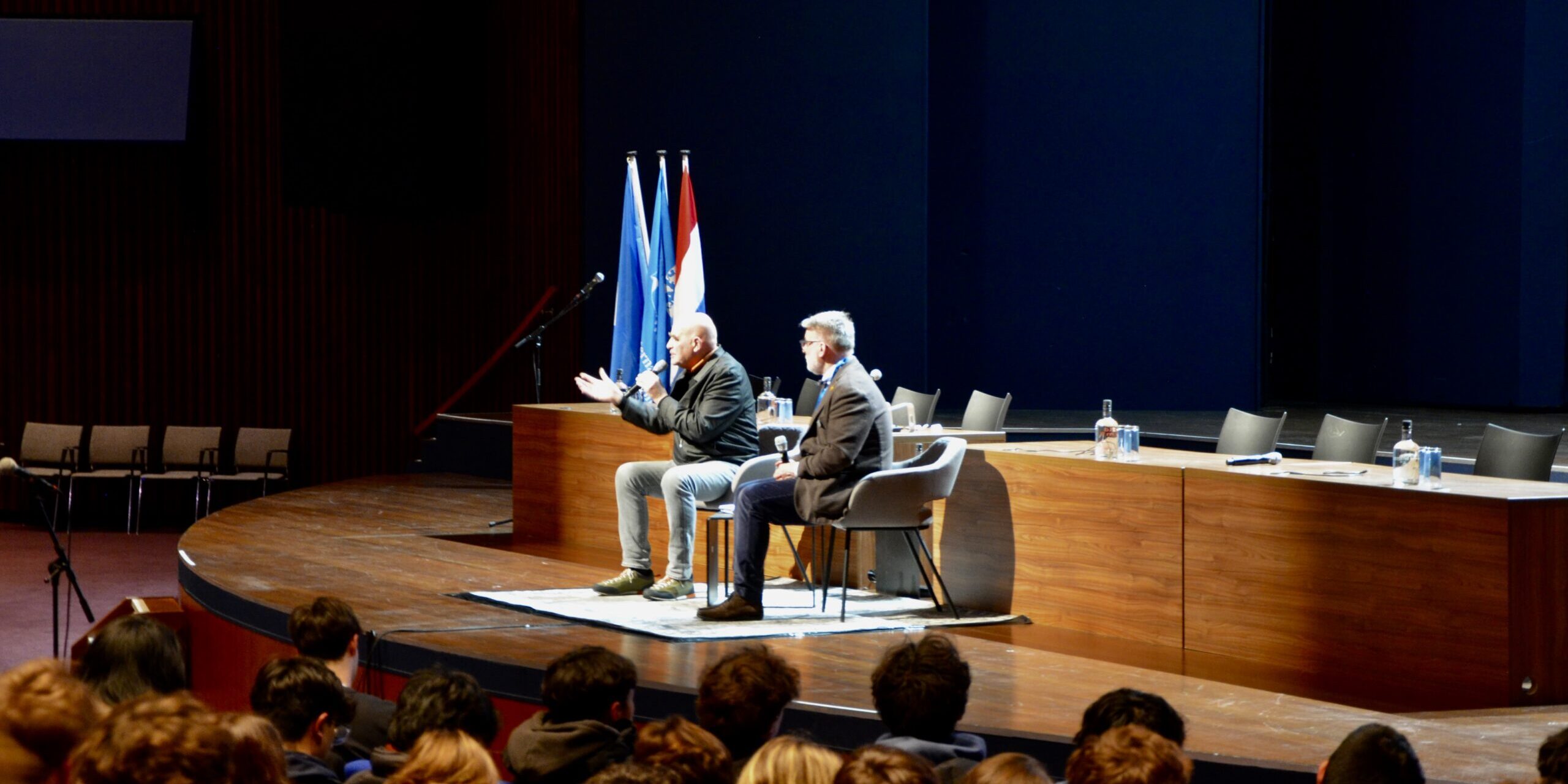
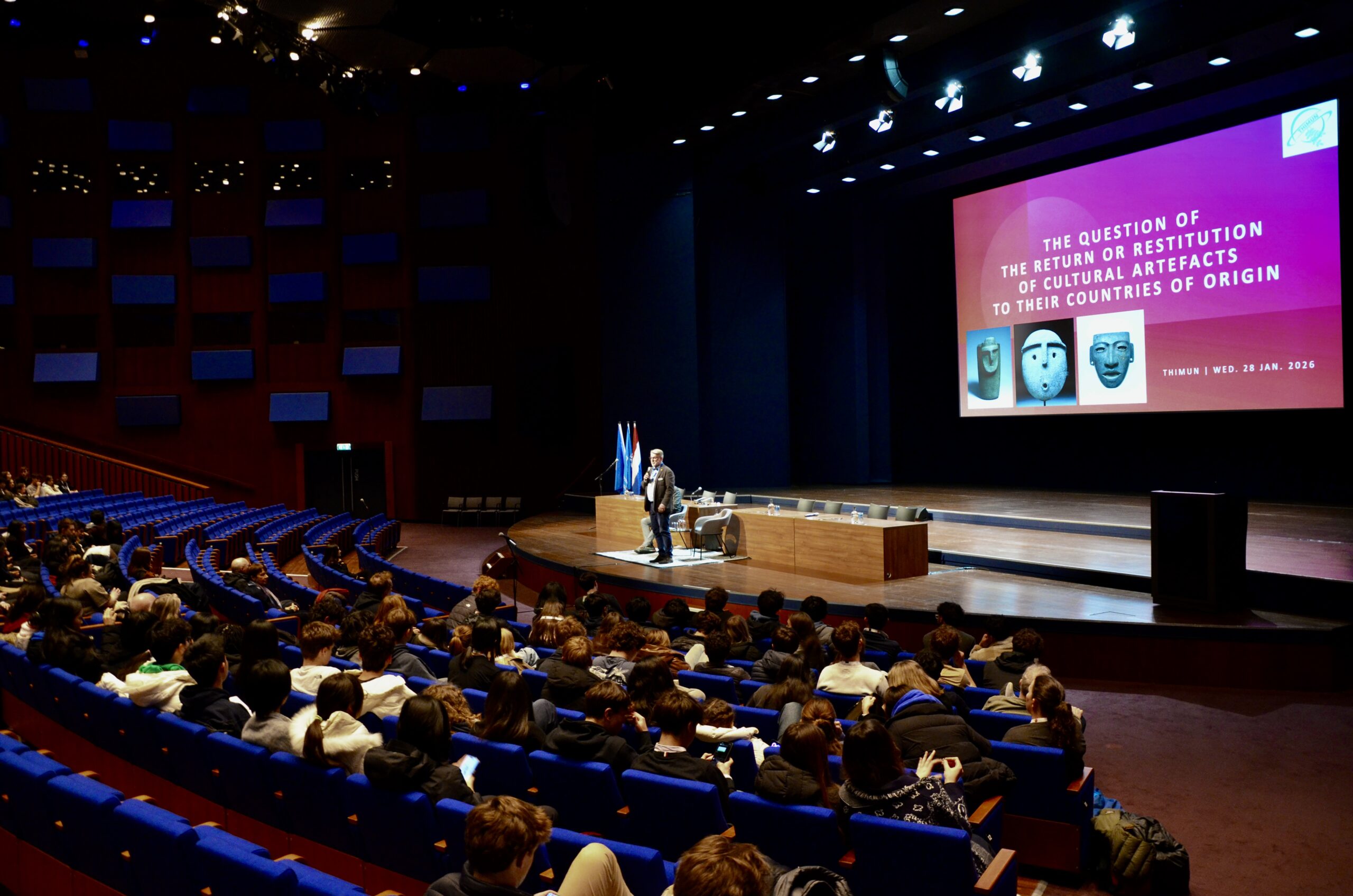
On Wednesday evening, THIMUN hosted an event led by Mr. Alain Meidinger at the World Forum. The program included a short documentary and a Q&A session with guest speaker Jos van Beurden on the return of cultural artefacts to their countries of origin.
The board director of THIMUN, Alain Meidinger, opened the event by introducing the question of restitution of artefacts. During colonial times, colonized countries were stripped of many cultural objects. According to a 2018 study, about 90% of African cultural artefacts are outside their territory of origin. Some may have heard, for example, of the Elgin Marbles, marble statues housed at the British Museum. These statues, originally part of the Parthenon in Athens, Greece, are often referred to as the Parthenon (or Elgin) sculptures. Since then, certain artefacts have been missing from their countries of origin, leaving gaps in those nations’ histories. Instead of having the original objects in their galleries, museums must leave empty spaces or use digital images to show important artefacts that are not present. However, countries have begun working together to reunite artefacts with their countries of origin. This process is called restitution: returning items that do not rightfully belong to the holding institution.
This topic was raised on June 7, 1978, by the Director General of UNESCO, who highlighted the deep cultural and emotional loss experienced by nations whose art and artefacts were held in foreign collections. This led to the founding of a special committee to respond to these demands. Since then, European countries such as France, the United Kingdom and Belgium have worked on returning certain artefacts; efforts have intensified since about 2015. For example, in the case of the Benin Bronzes, thousands of small bronze sculptures are being restituted to Nigeria and the Netherlands recently returned 119 of them.
Before the guest speaker segment, a documentary examined the issue in depth. For those who could not attend, the documentary “Inside Story: How does restitution of cultural artefacts affect the future of Western museums?” is available on YouTube from Al Jazeera. The film presented the complex situation clearly.
Experts in the documentary addressed different aspects of restitution. Karen Byera Ijumba, a researcher at Open Restitution Africa, emphasized that restitution can help communities restore cultural identity and that artefacts are not merely decorations to fill museum walls and attract visitors. Another expert featured was Barnaby Phillips, an author and historian who has written on current restitution debates, including the book Loot: Britain and the Benin Bronzes. He raises awareness of major restitution cases and highlights the complexity of negotiations between museums and source countries. The documentary also featured Jos van Beurden, the evening’s guest speaker.
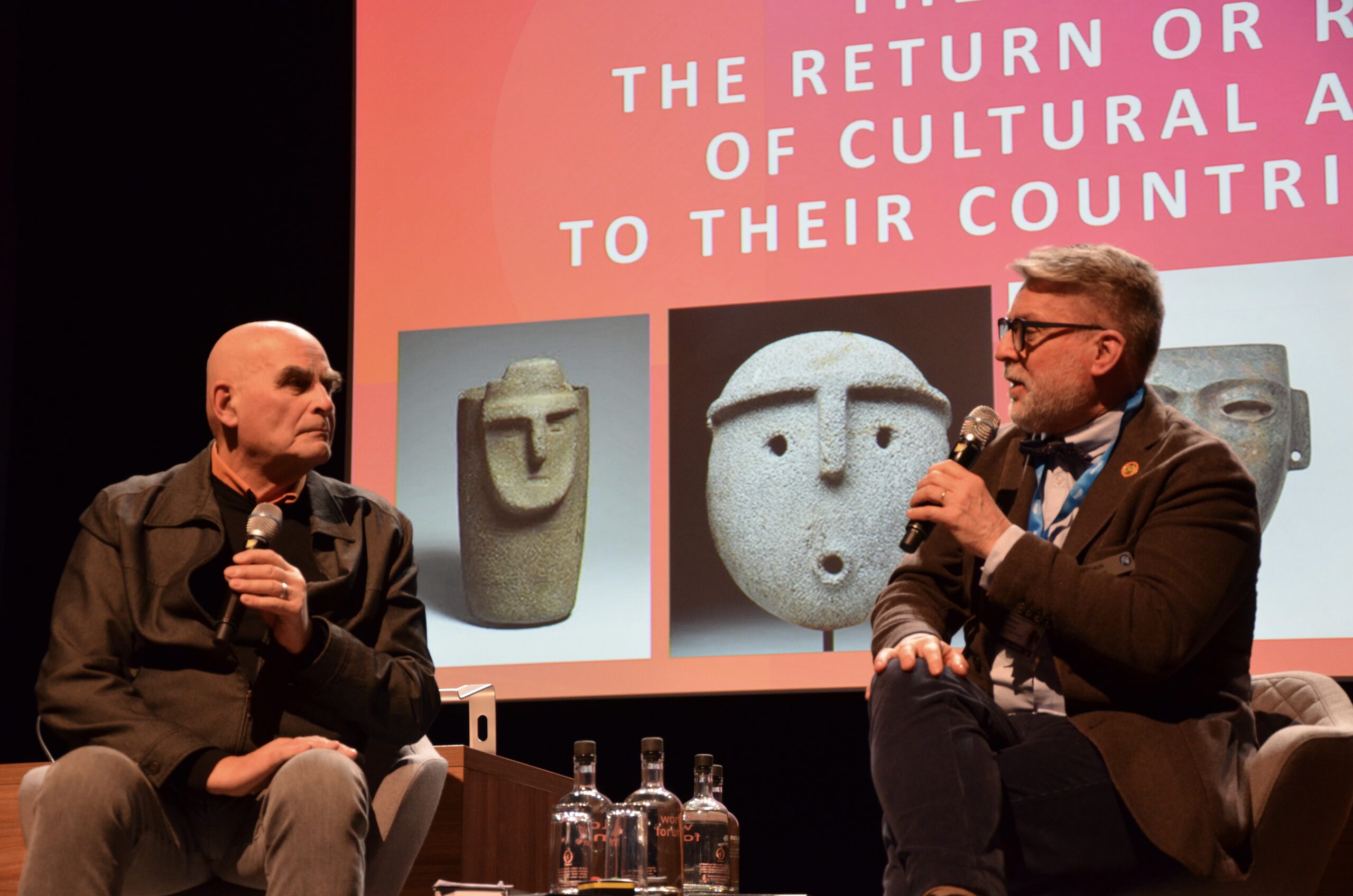
We had the pleasure of meeting Jos van Beurden for a brief interview; he joined Mr. Meidinger on stage. After an engaging conversation about the restitution of artefacts, Jos van Beurden answered questions from eager students. Van Beurden studies how colonial powers, mostly European countries removed and appropriated cultural artefacts during the colonial period, leaving those objects absent from their countries of origin today. He has written many accessible books and is the founder of the news service Restitution Matters, which compiles numerous studies about restitution and the current global situation. He works in the Netherlands and has traveled to more than 40 countries to research this topic. He says he does this work “out of a feeling of injustice and decency,” and cites George Orwell on human decency: “It’s normal decency that these objects shouldn’t be here. Because they were acquired in an improper manner and they should go back.”
As a final message, he urged us to “learn to listen. Learn to listen to the other side. And take them seriously.” Jos van Beurden encouraged open communication, asked people not to remain indifferent and urged everyone, above all else, to do what is right.