
HRC1: Freeing the Press – a debate on censorship
By Aksel Castel-branco
“The freedom of one ends where the freedom of another begins.”
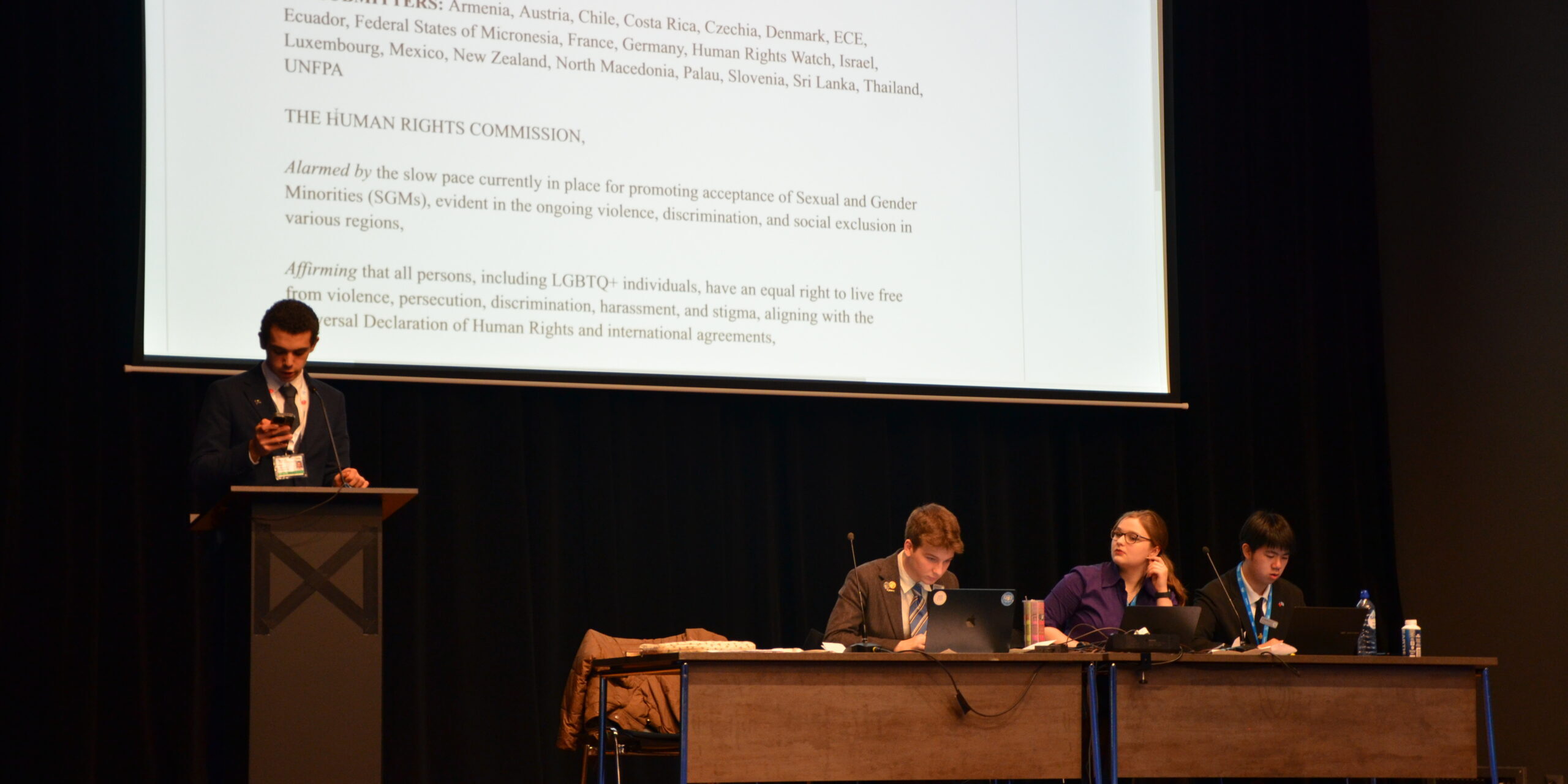
The question of censorship and political correctness has been at the forefront of debates surrounding freedom of speech and of the press, as was clearly reflected in today’s discussions in Human Rights Commission One (HRC1). Much of the discussion centered on balancing support for the media, minimizing infringement on countries’ sovereignty, and identifying misinformation.
Resolution HRC1 1.2, submitted by the Delegation of Burkina Faso and co‑submitted by 22 delegations including France, on issue No. 1 of the Human Rights Commission, “Protecting journalists and media workers’ freedom of expression in times of disinformation”, addresses three main areas: channels of communication between media and governments; combatting the use of misinformation by terrorists; and integrating courses on digital literacy into national curricula.
When asked to comment on protections for journalists from domestic prosecution, the Delegation of Burkina Faso stated, “The resolution focused mainly on making sure they are not being used by their government. […] There are some subclauses that protect them from their government, but we must not threaten national stability and political security in any way.”

Underlying controversies become increasingly apparent when considering that Resolution HRC1 1.1, submitted by the United Kingdom on the same topic, was rejected by the Commission. Despite internal opposition, HRC1 still approved the Delegation of Burkina Faso’s resolution, demonstrating an international commitment to manage the influence of misinformation affecting all Member States.
Indeed, it is inherently difficult to find a solution regarding freedom of the press that suits all political regimes and cultures, especially given the growing omnipresence of misinformation online. Although “training” journalists to align to government requirements may be ambiguous and could impose conformity to restrictive frameworks, overall this resolution encourages transparency and objectivity, which is, in the long run, beneficial to journalists and is a step in the right direction to support worldwide efforts to combat the spread of misinformation.